When homeowners think about sustainability, roofing isn’t always the first thing that comes to mind. But it should be.
Modern metal roofing doesn’t just perform exceptionally well, it often starts its life as recycled material. Aluminum, steel, and zinc are continuously reused, reshaped, and refined into new roofing panels without losing their core strength or durability.
Let’s take a closer look at how that process works, and why it matters for your home and the environment.
How Recycled Metal Becomes a High-Performance Roof
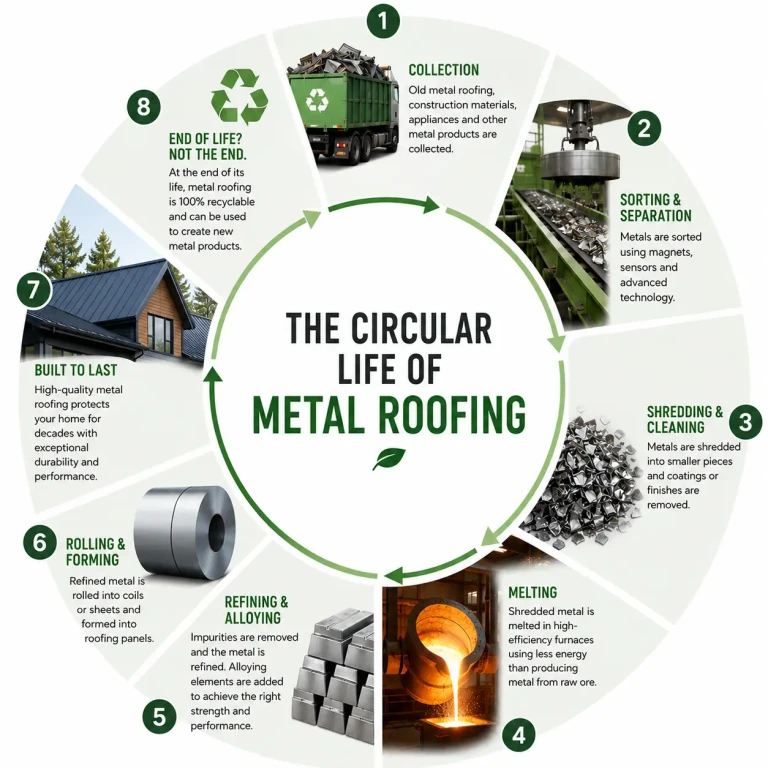
Unlike many traditional roofing materials, metal doesn’t follow a linear path from production to landfill. It moves in a loop.
Old materials like roofing panels, vehicles, appliances, and construction scraps are collected and processed. These metals are then melted down, refined, and formed into new coils that manufacturers use to create modern roofing systems.
The result is a material that can be reused again and again, without sacrificing performance.
How Aluminum Is Recycled for Roofing
Aluminum is one of the most efficiently recycled materials in the world.
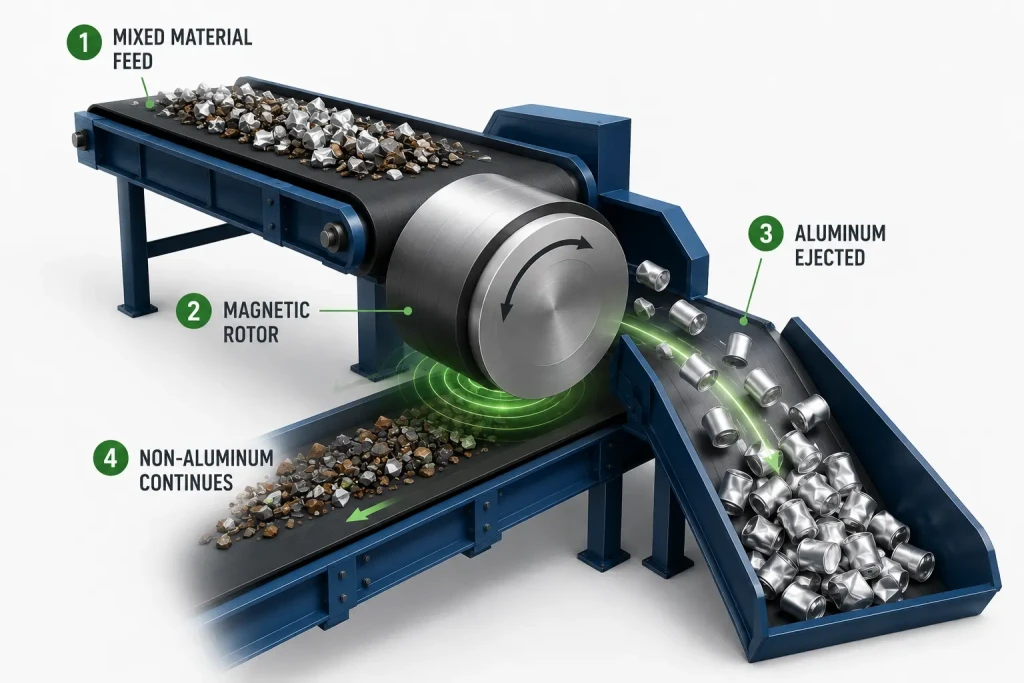
Since aluminum is not magnetic, it cannot be separated using magnets. Instead, recycling facilities use advanced technology called an eddy current separator. In this process, mixed materials move along a conveyor belt over a rapidly spinning magnetic rotor. Although aluminum itself is non-magnetic, the changing magnetic field creates electrical currents, known as eddy currents, inside the aluminum pieces. These currents generate their own temporary magnetic field, causing the aluminum to effectively repel away from the rotor and separate from other materials.
This innovative process allows recyclers to efficiently recover aluminum for reuse in products like metal roofing, helping reduce waste, conserve raw materials, and dramatically lower the energy required compared to producing new aluminum from mined ore.
Before being formed into roofing panels, the aluminum is adjusted into specific alloys to ensure the right balance of strength, flexibility, and corrosion resistance.
Why this matters:
- Recycling aluminum uses up to 95% less energy than producing it from raw materials
- It retains its quality through repeated recycling cycles
- Many aluminum roofing products contain a high percentage of recycled content
For homeowners, that means a lightweight, durable roof with a significantly lower environmental footprint.
How Steel Is Recycled for Roofing Systems
Steel is the backbone of many metal roofing systems and one of the most recycled materials globally.
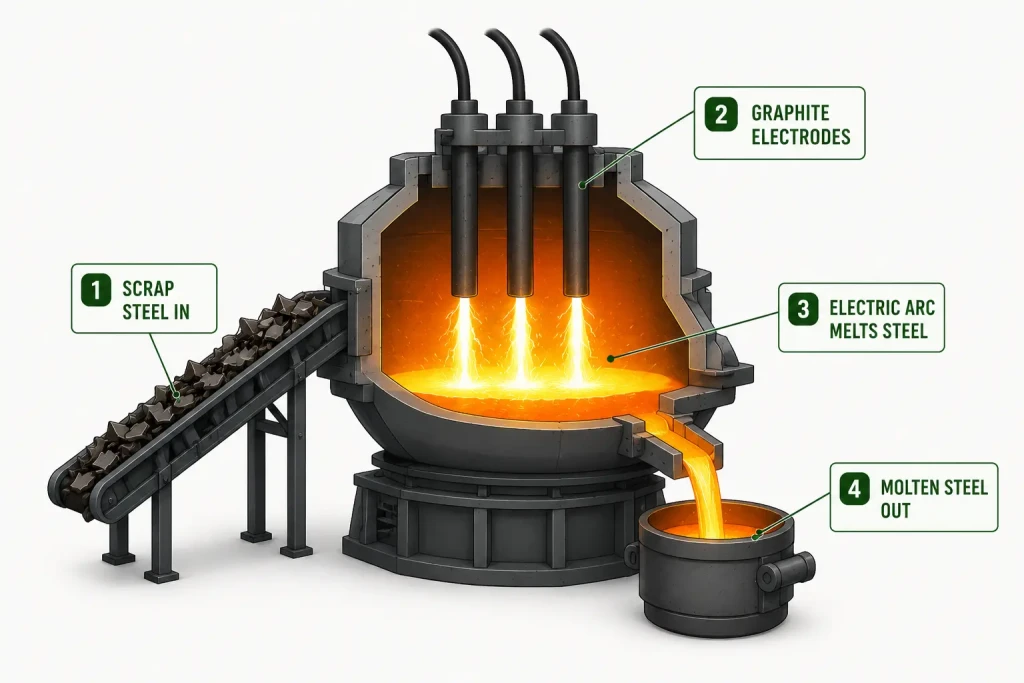
Once collected, steel is easily separated using magnets. It’s then shredded and melted in an Electric Arc Furnace, which uses electricity instead of coal-based methods.
Electric Arc Furnaces (EAFs) melt recycled steel using electricity instead of of coal. Graphite electrodes inside the furnace deliver an intense electrical current into the scrap metal. The heat created by the arc melts the steel. Arcs can reach temperatures of 3,000 C melting the steel within minutes.
After melting, the steel is refined and coated to enhance its performance:
- Galvanized steel is coated with zinc
- Galvalume® steel combines aluminum and zinc for enhanced corrosion resistance
The finished product is rolled into coils and formed into roofing panels.
Why this matters:
- Steel can contain anywhere from 25% to 100% recycled content
- The recycling process reduces energy use and greenhouse gas emissions
- Coated steel roofing offers exceptional durability and longevity
How Zinc Is Recycled for Architectural Roofing
Zinc is often used in premium architectural roofing and is valued for its longevity and low maintenance.
Recycled zinc is carefully sorted to maintain purity, then melted and refined before being rolled into sheets for roofing applications.
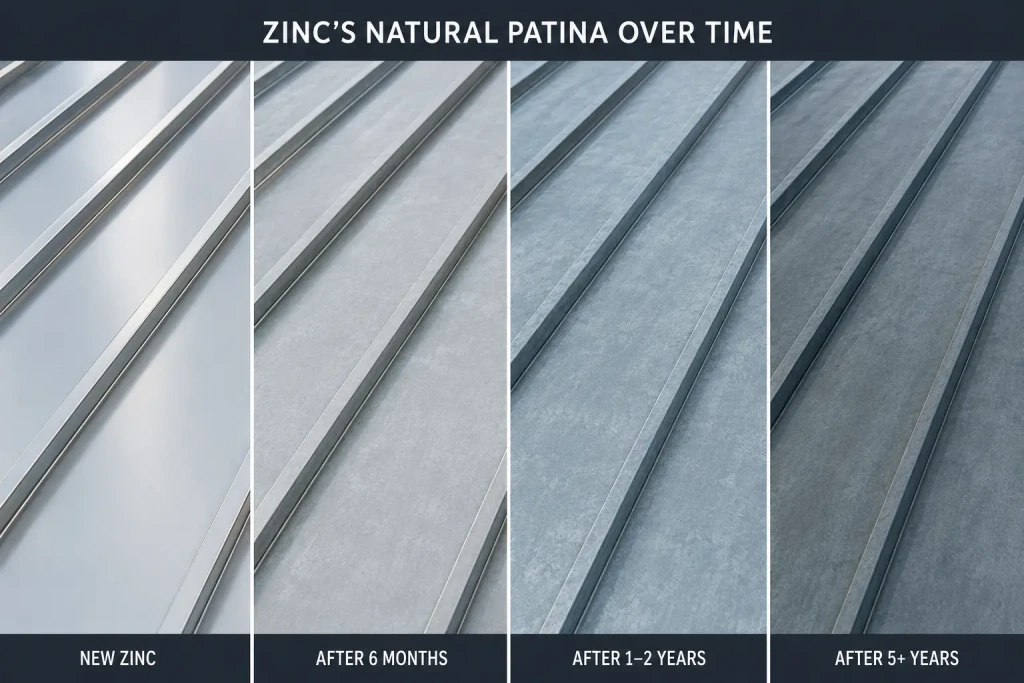
One of zinc’s most unique features is its ability to develop a protective patina over time. This natural layer helps the material resist corrosion and even self-heal minor scratches.
Why this matters:
- Zinc roofing can last 80 to 100 years or more
- It often contains a high percentage of recycled material
- It is fully recyclable at the end of its life
Why Recycled Metal Roofing Is Better for the Environment
Choosing a metal roof isn’t just about durability. It’s a decision that has a measurable environmental impact.
Reduced Resource Extraction
Recycling metals reduces the need for mining raw materials, which is energy-intensive and environmentally disruptive.
Lower Energy Consumption
Producing metal from recycled material requires significantly less energy, especially in the case of aluminum and steel.
Less Waste in Landfills
Unlike asphalt shingles, which often end up in landfills, metal roofing is fully recyclable at the end of its life.
Long-Term Performance
Metal roofs last decades longer than many traditional roofing materials, reducing the frequency of replacement and overall material use.
The Eco Exteriors Advantage
At Eco Exteriors, we help homeowners choose roofing systems that are built to last and designed with sustainability in mind.
If you’re exploring aluminum, steel, or zinc roofing options, we’re here to guide you through the process and provide a tailored recommendation for your home.
Contact us today for a free quote and learn how metal roofing can support both your home and the environment.