When homeowners think about roof longevity, they usually focus on the roofing material itself. Asphalt shingles, cedar shakes, metal roofing, and composite products all have different expected lifespans. However, one of the most important factors affecting every roofing system is often hidden from view:
Proper roof ventilation.
Whether your home has a traditional attic, a vaulted ceiling, or a low-slope roof assembly, ventilation plays a critical role in controlling heat and moisture. Without it, even the highest-quality roofing materials can age prematurely, leading to costly repairs and a shorter roof lifespan.
In North Vancouver’s climate, where homes are exposed to significant rainfall, moisture, and seasonal temperature fluctuations, proper ventilation isn’t optional. It’s essential.
What Is Roof Ventilation?
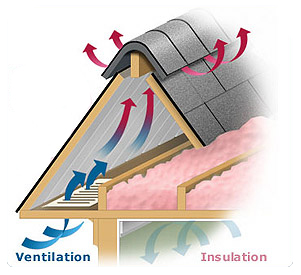
Roof ventilation is the process of allowing fresh air to enter and exit your roofing system.
In a typical attic system, this is accomplished through:
- Soffit vents that bring cooler air into the attic
- Ridge vents that allow warm, moist air to escape
- Gable vents or roof vents in some applications
The goal is to create continuous airflow that prevents heat and moisture from becoming trapped beneath the roof.
For homes without traditional attics, ventilation may be incorporated into the roof assembly itself through specialized venting systems, air channels, or ventilated roof designs.
Regardless of the roof structure, the objective remains the same:
Control moisture, reduce heat buildup, and protect the roofing system from premature deterioration.
Why Ventilation Matters in North Vancouver
North Vancouver’s climate presents unique challenges for roofing systems.
Throughout the year, homes experience:
- Frequent rainfall
- High humidity levels
- Long wet seasons
- Temperature swings between seasons
- Moisture generated inside the home from cooking, showers, laundry, and daily living
Without proper ventilation, this moisture can become trapped within the roofing assembly.
Over time, excess moisture may lead to:
- Mold and mildew growth
- Wood rot
- Insulation damage
- Reduced energy efficiency
- Premature roof aging
Even roofs that never develop leaks can suffer significant damage when ventilation is inadequate.
How Poor Ventilation Shortens Roof Lifespan
Excess Heat
During warmer months, trapped heat can dramatically increase roof temperatures.
High attic temperatures can:
- Accelerate shingle deterioration
- Cause roofing materials to become brittle
- Increase thermal expansion and contraction
- Stress underlayments and roofing components
The result is faster aging and a reduced service life.
Excess Moisture
In North Vancouver, moisture is often a bigger concern than heat.
When warm indoor air rises into the roof space and cannot escape, condensation forms on colder surfaces.
Over time, this can cause:
- Rotting roof decking
- Structural damage
- Mold growth
- Corrosion of fasteners and metal components
- Reduced insulation performance
Moisture damage often occurs gradually and may remain hidden for years before becoming visible.
How Ventilation Affects Different Roofing Materials
Asphalt Shingle Roofing
Asphalt shingles are the most common residential roofing material in Metro North Vancouver.
While modern asphalt shingles are highly durable, they are particularly sensitive to excessive heat buildup.
Poor ventilation can:
- Accelerate granule loss
- Cause shingles to curl or crack
- Increase thermal aging
- Reduce manufacturer warranty performance
With proper ventilation, premium asphalt roofs can often achieve their full expected lifespan of 25 to 50 years depending on the product and installation quality.
Without adequate ventilation, lifespan can be reduced significantly.
Cedar Roofing
Cedar is a natural product that performs exceptionally well when allowed to breathe.
However, trapped moisture is one of cedar’s biggest enemies.
Poor ventilation can contribute to:
- Excessive moisture retention
- Moss and algae growth
- Rot and fungal decay
- Premature splitting and deterioration
In North Vancouver’s wet climate, proper ventilation is especially important for cedar roofing systems.
A poorly ventilated cedar roof may experience substantial deterioration in as little as 10 to 15 years, while premium old-growth cedar that is properly maintained and ventilated can often last 40 to 50 years.
Metal Roofing
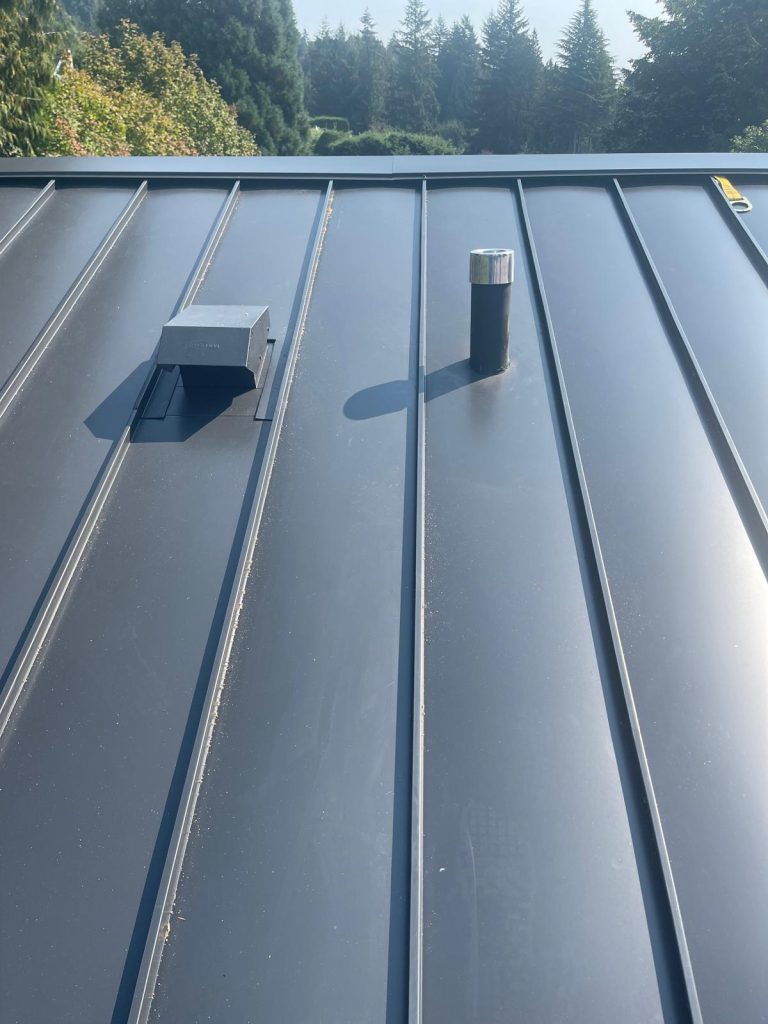
Many homeowners assume metal roofs are unaffected by ventilation because the roofing material itself doesn’t rot.
While metal panels are extremely durable, the roof assembly beneath them still requires protection.
Poor ventilation can lead to:
- Condensation beneath panels
- Corrosion of fasteners
- Moisture damage to decking
- Reduced insulation effectiveness
Because metal roofs typically last 50 years or longer, protecting the underlying structure becomes even more important.
Proper ventilation helps ensure the entire roofing system achieves its intended lifespan.
Composite Roofing (Enviroshake & Similar Products)
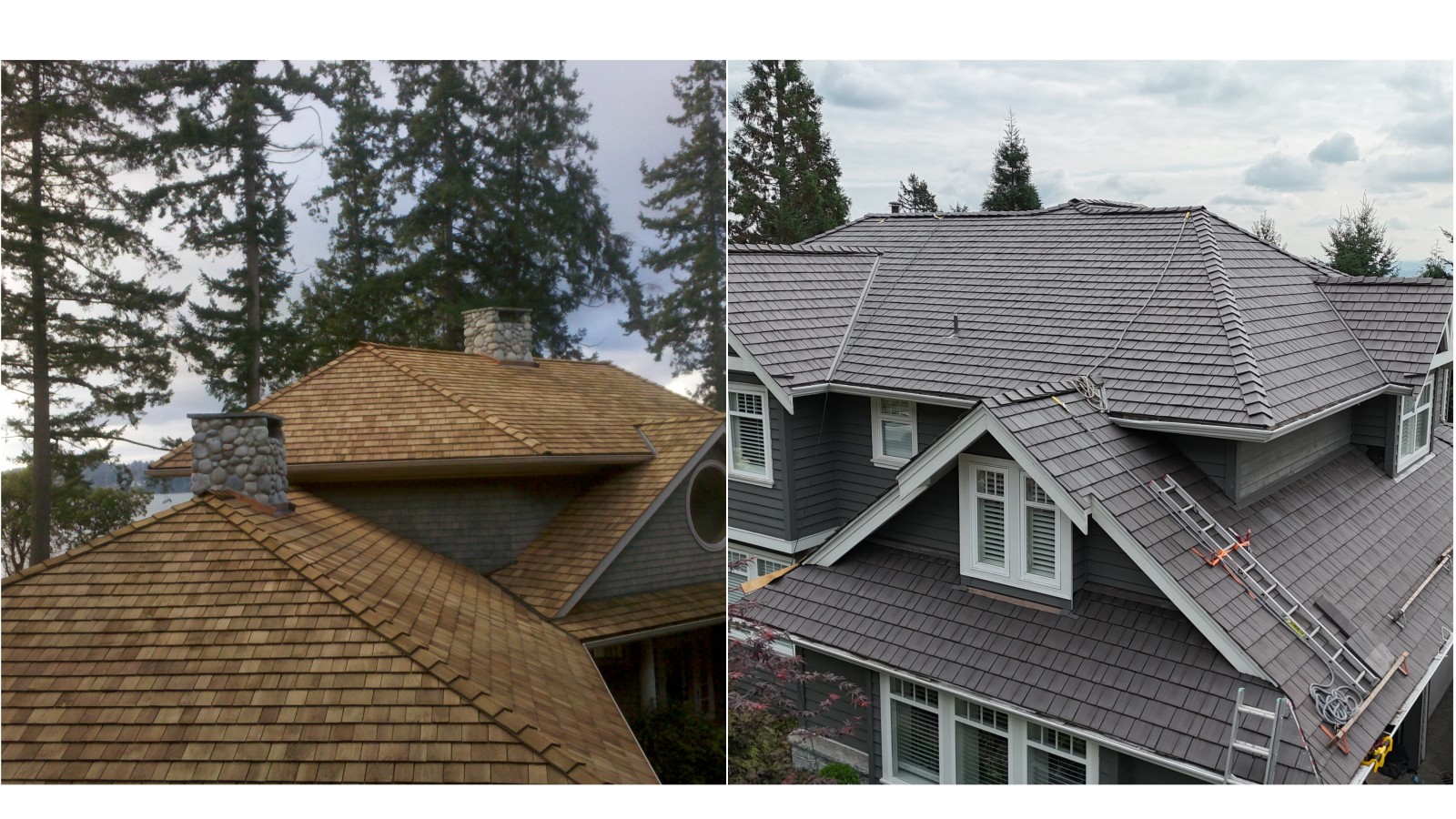
Composite roofing products such as Enviroshake are engineered to replicate the appearance of cedar while offering superior durability and reduced maintenance.
Although composite materials are highly resistant to moisture, the roof assembly underneath remains vulnerable to trapped heat and condensation.
Poor ventilation can still contribute to:
- Decking deterioration
- Moisture accumulation
- Structural damage
- Reduced system performance
A properly ventilated composite roofing system helps maximize long-term performance and supports the manufacturer’s expected service life.
Homeowners comparing synthetic and natural roofing materials can explore our detailed comparison of Enviroshake vs cedar roofing to understand the differences in durability, maintenance, and long-term value.
What About Homes Without Attics?
Many modern homes feature vaulted ceilings, cathedral ceilings, or roof assemblies without a conventional attic space.
These homes still require ventilation.
Depending on the design, ventilation may be achieved through:
- Ventilation channels above insulation
- Vented roof assemblies
- Specialized underlayments
- Above-sheathing ventilation systems
- Engineered roof cavity designs
Every roofing system needs a strategy for managing heat and moisture.
A roof without an attic is not a roof without ventilation.
Warning Signs of Poor Roof Ventilation
Homeowners may notice:
- Excessive attic heat during summer
- Persistent musty odors
- Mold or mildew in attic spaces
- Frost or condensation during colder months
- Premature roofing deterioration
- Increased energy bills
- Curling shingles
- Persistent moss growth
Many ventilation issues are not obvious until a professional inspection is performed.
If you’re planning a roof replacement or wondering whether your current roof is properly ventilated, a professional inspection can identify hidden issues before they become costly repairs.
Ventilation and Energy Efficiency
Proper ventilation doesn’t just extend roof life.
It can also improve comfort and energy efficiency.
Benefits may include:
- Lower cooling costs during summer
- Reduced moisture-related insulation issues
- More consistent indoor temperatures
- Reduced strain on HVAC systems
A properly functioning roofing system works together with insulation and air sealing to create a healthier, more efficient home.
Frequently Asked Questions
Does every roof need ventilation?
Yes. Whether a home has a traditional attic, vaulted ceilings, or a compact roof assembly, every roof needs a way to manage heat and moisture. The ventilation method may vary, but the need remains the same.
Can poor ventilation void a roofing warranty?
In some cases, yes. Many manufacturers require roofing systems to meet ventilation standards as part of their warranty requirements. Improper ventilation can contribute to premature roof failure and may affect warranty coverage.
How long can poor ventilation reduce roof lifespan?
The impact varies by roofing material and conditions, but poor ventilation can shorten a roof’s lifespan by many years through accelerated aging, moisture damage, and structural deterioration.
Is ventilation important for metal roofing?
Absolutely. While metal roofing materials themselves are highly durable, condensation beneath the panels can damage roof decking, insulation, and structural components if ventilation is inadequate.
Roof Lifespan Starts Beneath the Surface
The roofing material you choose matters, but ventilation often determines whether that material reaches its full potential.
Whether you have asphalt shingles, cedar shakes, metal roofing, or composite products like Enviroshake, proper airflow helps protect your investment from heat, moisture, and premature deterioration.
In North Vancouver’s wet climate, roof ventilation isn’t just a building-code requirement. It’s one of the most important factors affecting the long-term performance of your roof.
If your current roof is showing signs of premature aging due to ventilation issues, a professional assessment can determine whether repairs or a complete roof replacement in North Vancouver is the better long-term solution.
A roof is only as healthy as the system supporting it, and ventilation is one of the most important pieces of that system.